Showing posts with label Study. Show all posts

Saturday, June 24, 2017

~ Reading Thoughts & Emotions
of others through their eyes. ~


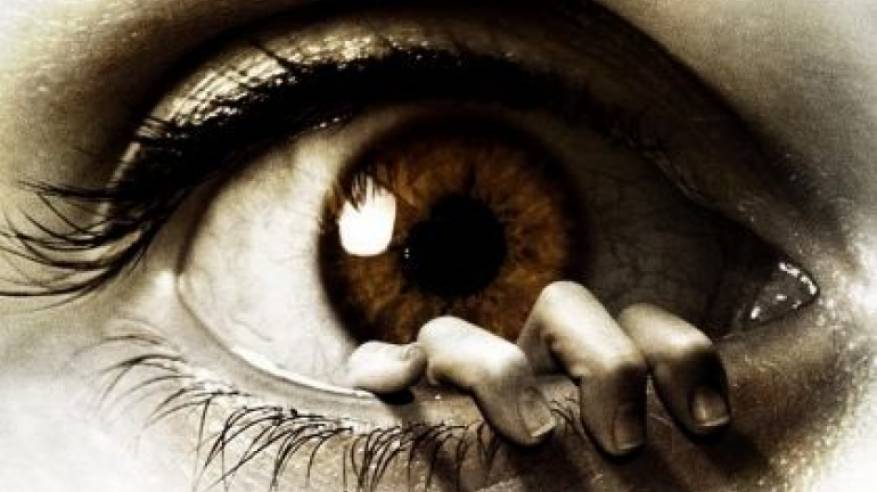
A new study suggests that our DNA influences our ability to read a person's thoughts and emotions from looking at their eyes.

Twenty years ago, a team of scientists at the University of Cambridge developed a test of 'cognitive empathy' called the 'Reading the Mind in the Eyes' Test (or the Eyes Test, for short).  This revealed that people can rapidly interpret what another person is thinking or feeling from looking at their eyes alone.  It also showed that some of us are better at this than others, and that women on average score better on this test than men.

Do you believe that you can read someone else's mind by looking at their eyes?

Through the Study that was done, the team confirmed that our genes influence performance on the Eyes Test, and went further to identify genetic variants on chromosome 3 in women that are associated with their ability to "read the mind in the eyes."

Previous studies have found that people with autism and anorexia tend to score lower on the Eyes Test.  The team found that genetic variants that contribute to higher scores on the Eyes Test also increase the risk for anorexia, but not autism.  They speculate that this may be because autism involves both social and non-social traits, and this test only measures a social trait.

Varun Warrier says: "This is the largest ever study of this test of cognitive empathy in the world.  This is also the first study to attempt to correlate performance on this test with variation in the human genome.  This is an important step forward for the field of social neuroscience and adds one more piece to the puzzle of what may cause variation in cognitive empathy."
Professor Bourgeron adds:  "This new study demonstrates that empathy is partly genetic, but we should not lose sight of other important social factors such as early upbringing and postnatal experience."
Through the Eyes of a baby

What do you believe your baby sees when looking into your eyes?  What do you believe babies witness in their little lives that affect the way they see others and the world at large?

Journal Notes

The questions about babies are questions for you to think about and use to write your Journal Notes on for today.
Can you remember anything from your youth that you witnessed that still remains in your mind many years later?
Journal your thoughts . . .

See you in the next Blog Session!

Peace, Love & Light,

 René


© Copyright - René Allen - JUNE 2017 - All Rights Reserved


Sunday, May 28, 2017

Psychosis: A Misunderstood Illness


Mental Health Awareness Month
MAY 2017


Welcome back to the Blog all Readers, Followers & Visitors!

We are in the midst of a heavy duty discussion about mental health.  We've been using our Journals as a way to take notes about what we have been learning here on the Blog, as well as take notes about what is actually going on with each of us personally.

Mental Health is a very important area of our lives.  It is vital that our well being physically, emotionally, spiritually, and mentally be in top shape.  The very reason that we get up each day should be so that we may live our lives to the best of our ability with as little stress and strain as possible.  That sounds really nice right?  Yes, it does!  Is it possible?  Yes, it is!
Let's use our Journals as therapy

Right at this moment, while you are here on the Blog, just take a moment to breathe.  Breathe in then breathe out... inhale, then exhale.  Feel your breath, and notice whether you are tense or not.  If you feel tension anywhere in your body, please take a moment now to notice where the tension is and write it down in your Journal.  Then repeat the breathing process and notice whether the tension in your body is decreasing or not.  If it is not decreasing, stretch both your arms out to your sides, then pull your arms in.  Repeat this process and make a note of how your body feels.  Stretch your arms to your back, and then pull your arms back to your sides -- straight out.  Then do the same with your arms moving them from your sides to the front of your body.  Notice how the muscles in your back respond.  Move your head from left to right, then from front to back.  Repeat two more times.  Now back to breathing ~ Breathe in then breathe out... inhale, then exhale.  Feel your breath, and notice whether you are tense or not.  Make notes in your journal of the areas in your body where you feel tension.  Work on those areas of your body to loosen them up.
Do Arm Stretches
to loosen up

We can work on the arm stretches and leg stretches to loosen up our bodies so that we minimize the stress build up that happens with each of us every day without us being aware of it.  Remember to roll your head around to the left then to the right to loosen up.  Stretch your back by bending your upper body to the right, then to the left...then backwards, then forwards.  Make notes in your Journal daily of how you feel after your breathing exercises and stretches.

Our Journal will open up areas of discovery about ourselves that we had not thought about.  The main thing that we each want to do now is get ready to write about our topic for today.

Take Notes about today's area of mental health . . . 

Psychosis


What is psychosis?
Psychosis is a condition defined by a group of illnesses that disrupt the functioning of the brain to the point where normal functioning in everyday life becomes almost impossible.  Someone experiencing an episode of psychosis is called psychotic.  A psychotic person will lose contact with reality.
Question for you:  Do you know anyone who has lost contact with reality?
What are the symptoms of psychosis?
Delusions:  An idea or belief that someone believes is real but is contrary to reality.  For example; a person experiencing delusions may think that they are an important figure like Jesus Christ – these are called delusions of grandeur.
Hallucinations:  A false sensory perception.  A person experiencing hallucinations may hear, feel, see, taste or smell something that is not there.  Commonly, they will hear an external voice(s) that no one else can hear.
Confused thinking:  Everyday thoughts become confused and sentences may be unclear or hard to understand. Thought can speed up or slow down making following a conversation and remembering things difficult.
Changed feelings:  How you feel can change for no particular reason.  You may feel odd and cut off from the rest of the world.  Mood swings are also common and you may go from massive highs to massive lows.  You may seem to feel less emotion, or show less emotion to those around you.
Changed behaviour:  You may be extremely active or have difficulty getting the energy to do things, laugh when things don’t seem funny, or become angry or upset without any cause.
What are the types of psychotic illnesses?
Schizophrenia:  A complex mental illness with those diagnosed with it experiencing an array of psychotic symptoms.  Contrary to popular belief, a schizophrenic person does not have a ‘split personality’.
Bipolar disorder:  A mental illness categorised by extreme moods being either very high or very low known as mania. These episodes of extreme moods can lead to psychosis.
Drug induced psychosis:  Caused by drugs such as alcohol, marijuana, magic mushrooms, LSD and ecstasy etc. The psychotic episode lasts until the effects of the drugs wear off (hours or days).
Brief reactive psychosis: Psychotic symptoms lasting less than a month and due to a stressful life event.
Psychotic depression: Sometimes depression can become so intense and severe that it results in psychotic symptoms.
What are the causes of psychosis?
Although the exact causes are not yet fully understood, it is likely that psychosis is hereditary.  Environmental factors like drugs and stress, among others, may also play a role in one developing a psychotic illness.
How is it diagnosed?
There’s no specific test for psychosis.  A healthcare professional will determine whether a person is psychotic depending on the symptoms they exude.  Generally, a doctor will perform other tests to rule out another condition.
What treatments are available?
With a psychotic episode early intervention is key and may reduce the length of the psychotic episode.  Treatments usually involve medication, education about the illness, counselling, support from family, friends and community, avoiding drugs and reducing levels of stress.
Key points to remember:
• There is a stigma surrounding mental illness but 1 in 5 people will experience mental illness during their lifetime.
• Psychotic people are often misconstrued as being unpredictable and dangerous but they often only pose a threat to themselves.
• If you know someone that is experiencing a psychotic episode it is important that you offer them as much help as you can so they can get better.
• A psychotic episode can happen to anyone, regardless of age, sex, culture or location.
A psychotic episode can be very scary and confusing and should be treated with understanding and not criticised or laughed at.

I sure hope you have enjoyed this educational Blog Session about Psychosis.  We'll see you back here for our next exciting Blog Session about mental health, and don't forget to bring your Journal along!


Peace, Love & Light,

 René


©Copyright - René Allen - MAY 2017 - All Rights Reserved
 

Saturday, May 27, 2017

Mental Health Awareness Month
May 2014

Our Blog Topic for Today
PSYCHOSIS


Good Evening Blog Readers, Followers & Visitors ~
All month long, we have been focusing on mental health.  We are paying particular attention to the fact that May is Mental Health Awareness Month.  Our mental health is very important, and yet, it is rarely discussed.

How many times have you taken the time to ask your friends and family about their mental health?  If you did take the time to ask the question ~ "How is your mental health?"  Do you think you'd get an honest response?  Do you think that people really know where they stand in terms of their mental health?  Do you think that people look at themselves one way, and that other people on the outside look at them in another way?

While we have covered many topics concerning mental health so far this month, there are so many other areas relative to mental health that are as yet left uncovered here on the Blog.

Our mission tonight is to discuss the topic of Psychosis.  So you'll want to grab your Journal or Notebook and get ready to take notes . . .


With tonight's topic being Psychosis.  You may be wondering, "What is Psychosis?"

Psychosis is a general term to describe a set of symptoms of mental illnesses that result in strange or bizarre thinking, perceptions (sight, sound), behaviors, and emotions. Psychosis is a brain-based condition that is made better or worse by environmental factors - like drug use and stress.

How Common is Psychosis?

One frequently cited statistic is that 1% of the population is diagnosed with Schizophrenia in their lifetime, but actually 3.5% of the population experiences psychosis.  Hearing voices and seeing things that aren’t there are more common than we think.  While these experiences can be scary and confusing, it is possible to recover and getting better, especially when we tackle issues early.
Psychotic Disorders

What are the Different Kinds of Psychotic Disorders?

Conditions that have psychosis as a main symptom are referred to as psychotic disorders.  However, psychosis may also occur as a feature of other disorders like bipolar or major depression.  Some of the more common types of psychotic disorders include:

Schizophrenia:  is a serious mental health disorder that affects how a person thinks, feels, and acts.  People with schizophrenia may have trouble distinguishing what is real and what is imaginary.
Schizophreniform Disorder:  consists of the same symptoms of Schizophrenia but occurs for a time period of at least one month but no more than six months.  If symptoms last longer than this period, a person is given a diagnosis of Schizophrenia.
Schizoaffective Disorder:  is characterized by persistent symptoms of psychosis resembling schizophrenia with additional periodic symptoms of mood (or affective) disorders.  
Delusional Disorder:  is characterized by irrational or intense belief(s) or suspicion(s) which a person believes to be true.  These beliefs may seem outlandish and impossible (bizarre) or fit within the realm of what is possible (non-bizarre).  Symptoms must last for 1 month or longer in order for someone to be diagnosed with delusional disorder.
Brief Psychotic Disorder:  includes symptoms of psychosis that last at least 1 day but no longer than 1 month. Symptoms are typically sudden and are sometimes responses to a stressful life event.  While an individual may experience severe distress during the episode, people quickly return to their daily lives and their symptoms do not return.
Schizotypal Disorder:  is a personality disorder that can easily be confused with schizophrenia due to the nature of people with schizotypal personality disorder to have "magical" or eccentric beliefs, unusual thoughts and paranoia.  People with schizotypal personality disorder may experience brief psychotic episodes with delusions or hallucinations, but the episodes are not as frequent, prolonged or intense as in schizophrenia.


Symptoms of Psychotic Disorders

When trying to figure out if something is going on, it’s important to keep a few things in mind.  A person might experience one symptom, but it’s more concerning when someone experiences more than one symptom.  A change for one or two days might be a related to sleep or stress, but experiencing symptoms for more than a few days or weeks, is worthy of an evaluation by a mental health professional.  If you’re concerned about a loved one, pay attention to sudden changes in their thoughts, emotions, and behaviors.  Changes that seem really out of character might be early warning signs of psychosis.  The following is a list of symptoms of psychosis:
  • Hearing or seeing something that isn’t there
  • A constant feeling of being watched
  • Disorganized or bizarre speech or writing
  • Inappropriate or unusual behavior
  • Strange body movements or positioning
  • Feeling indifferent or numb about important situations
  • Deterioration of academic or work performance
  • A change in personal hygiene and appearance
  • A change in personality
  • Increasing withdrawal from social situations
  • Irrational, angry or fearful response to loved ones
  • Inability to sleep or concentrate
  • Extreme preoccupation or fears that seem bizarre
  •  
Hopefully you've been enlightened by tonight's Mental Health Blog Session, and you've taken some good notes.

We'll see you back here for our next exciting Blog Session about mental health, and don't forget to bring your Journal along ~

Peace, Love & Light,

 René


©Copyright - René Allen - MAY 2017 - All Rights Reserved