Showing posts with label healing. Show all posts

Tuesday, December 19, 2017

The year 2017 . . .

Praying Hands


Good Afternoon Poets, Poetry Lovers, Writers, Authors, Artists, Blog Readers, Followers & Visitors ~ It is that time of the year when everyone is reflecting on the 2017 year ~ what can be made better, forgiven, forgotten, and/or used as a stepping stone.  While some people never take the time to reflect on their lives at the end of each year, many of us do, and many of us do so on a more regular basis.  How about you?  How do you feel your 2017 year went?  Do you have hope for the future?  Are you motivated to move forward or do you have some reservations about what is to come?

Looking toward the future . . .

There are many writers who are very familiar with prayer and Devotionals.  Being in tune with your spirit and the world you live in is vital to opening up your level of awareness.  Clearing out all that is harmful and toxic is something that we should look forward to doing at this time of the year.

Our future rests in the hands of the adults who have wisdom and knowledge and who make it a point to guide our youth -- not only by speaking with them, teaching them, and guiding them, but also by being a walking and living example for them.

Believe it or not, many children pray . ..

Hope begins with a prayer

Children's prayers are powerful

Learning at an early age
about the power of Prayer

Children know more about 
the spiritual world than many
people give them credit for

Every day we have an opportunity to make a difference in the lives of those we come in contact with.  Our egos should never stand in the way of progress.  There is always someone who knows more than we do, feels deeper than we do, and has experienced deeper hurts or struggles than we have.  Writing is therapeutic, and that is why as a poet, author, writer, filmmaker, song writer, playwright, producer, director, artist, innovator, or any human being living and breathing on this earth ~ you can make a huge difference in this world. 

As a child, it is good if you have been taught that you do not always have to be right.  Nor do you always have to speak over everyone else around you.  There is a tone that is hurtful, and there is a tone that is healing.  It matters if you seek to harm others or if you seek to help others.  It is important if you have the mind-frame of a friend or if you have the mind-frame of a foe.

As a Leader, you know that it not all about "you" ~ but about others ~ and many more people than your selfish "self".  Wouldn't it be an unpleasant experience to have a community leader that only seeks to serve their own interest?  Wouldn't it be rather devastating to have a person over your city who cares only about filling their own pockets and the pockets of their friends?  We dare not hope for a President over a country to seek to cause division or destroy progress that has taken place under the leadership of another or at the peril of the people he or she serves to protect and uplift.

Our households should be a safe-haven, and not a combat zone.

Family Fighting-Contention  

Contention does not breed well for healthy environments.  Therefore, we should avoid contentious people, avoid initiating contentious conversations, and steer clear of being a party to contentious groups of people.  We should also seek to show our children what healthy, nurturing and peaceful environments look and feel like, so that they do not learn to be a discomfort to others nor gravitate to dissentious or quarrelsome people because that is all they have known and/or learned.

There is a lot more to be said, but in the meantime, I'll leave you with this short statement . . .

The new normal should be P E A C E.

OUR NEXT BLOG SESSION:

What we pray for in the year ahead...
Peace, Love & Light

By René Allen

©Copyright - René Allen - 2014-2017 - All Rights Reserved

Tuesday, June 27, 2017

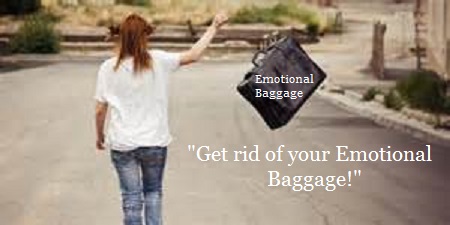
Get Rid of Your Emotional Baggage . . .

Get Rid of Your Emotional Baggage . . .

Blog Session
June 2017


If you are ready to tackle the issue of emotional baggage, then you are in the right place.  Our Blog Session today will dive into the emotional baggage that many of us, and the people we know carry around with us daily.  It is time to identify it, Journal about it, and get rid of it.

If you are new to our Blog Sessions, then you will want to get a Journal so that you may take notes, and also journal your thoughts and feelings as we go through our Blog Sessions. You will find Journaling to be a very valuable and helpful practice.  So at this point, grab your Journal, Diary, or Notebook so that you may begin to take notes...

Journal time!

The older we get, the worse it gets if we don't recognize that we have emotional baggage holding us back, and holding us down.

Make a note in your Journal that Emotional Baggage consist of unresolved issues of an emotional nature that oftentimes can be detrimental to your well-being.

Emotional baggage comes in a variety of different forms.  One of the main sources of baggage is "Rejection".
  
  1. Rejection actually activates the same pathways in your brain as physical pain, which is one reason why it hurts so much.  The feeling of rejection toys with your innate need to belong, and for some people, it is so painful and distressing that it interferes with your ability to think, recall memories and make decisions.  The sooner you let go of painful rejections, the better off your mental health will be.

One of the main problems with carrying baggage around, other than the fact that it weighs you down and gets in the way of your progress, is that people tend to "ruminate" over their baggage.

  1. When you ruminate, or brood, over a past hurt, the memories you replay in your mind only become increasingly distressing and cause more anger — without providing any new insights.  In other words, while reflecting on a painful event can help you to reach an understanding or closure about it, ruminating simply increases your stress levels.

The other big bag that people tend to carry around is "blame".  When things go wrong in your life, blaming others is the easy way to turn the finger from pointing at yourself to someone else.  While it may make you feel better for a moment, it is not wise to hold on to such a bad habit.  It is not anyone else's fault for your problems, failures, short-comings, or insecurities.  And, even if it were someone else's fault, what good will carrying the baggage of blame around do for you?

Keep this in mind:  You are not helpless, nor hopeless.

  1. If you allow yourself to feel "helpless" after a failure, or "blame" it on someone else, or your lack of ability or bad luck, it's likely to lower your self-esteem.  Blaming a failure on specific factors within your control, such as planning and execution, is likely to be less damaging, but even better is focusing on ways you can improve and be better informed so you can succeed next time.

What about the real heavy luggage that we carry around called, "guilt".  Do you find yourself carrying around guilt?

  1. Guilt can be beneficial in that it can stop you from doing something that may harm another person (making it a strong "relationship protector").  But guilt that lingers can impair your ability to focus and enjoy life.  If you still feel guilty after apologizing for a wrongdoing, be sure you have expressed empathy toward them, which will likely lead to forgiveness.

Do you have a problem forgiving others?  Is it something that you struggle with, and you know it is weighing you down? Are you able to have compassion or empathy for others?  Are you so self-centered that you cannot put yourself in another person's shoes?  Do you find it hard to believe that other people have feelings just like you do?  Have you ever taken the time to discuss an issue that has been weighing you down with the very person who is connected to that issue?  Do you enjoy playing the martyr?  Could your thinking process be totally off track and you have been told this many times, but you insist on always being right?  Is it possible that the person responsible for your problems and issues is YOU?

Many times, our thoughts and judgments are the source of our emotional pain.

The human mind,  inherently impatient, triggers emotional reactions when our ideas about how things should be collide with how things are.  We sometimes torment ourselves about choices we’ve made, words we’ve spoken, and the path or paths not taken.  Or we dwell on the future, postponing our happiness with thoughts about what is missing or wrong in the present moment.

We must understand clearly that the mind has a lifetime of conditioned beliefs and expectations through which it filters all perceptions.  While the body spontaneously lets go of pain the moment the underlying cause is healed, the mind has a mysterious instinct for holding on.  Through the mind, we create a prison of suffering and then forget that we are the architect and that we ourselves hold the key that will set us free.
Even after years of emotional healing work, we all sometimes make the mistake of believing that something “out there” makes us angry, depressed, anxious, or afraid.  In reality, outside events are only triggers.  The cause of every emotion is within.  By uncovering the false perceptions that cause us to cling to pain, we can open to a deep experience of peace.
In our next Blog Session, we will discuss ways in which you may find your way back to your core of balance, peace, and well-being.  Our  main objective is to get rid of the baggage...

Friends ~ See you in our next Blog Session!

until then . . .

Peace, Love & Light,

 René


© Copyright - René Allen - JUNE 2017 - All Rights Reserved    

Sunday, June 25, 2017

Dealing with Emotional Pain

Blog Session
June 2017


We are going to discuss a tough topic today.  It is the topic of Emotional Pain.  Everyone knows of it, many have felt it personally, and most of us have had to deal with it in one way or another.

What is emotional pain?

Psychological pain or mental pain is an unpleasant feeling (a suffering) of a psychological, non-physical, origin.  A pioneer in the field of suicidology, Edwin S. Shneidman, described it as "how much you hurt as a human being.  It is mental suffering; mental torment."

Emotional Pain has no particular name on it.  It hits men, women, young adults, babies, and even animals.

Emotional Pain in babies

Emotional Pain in Young Adults

Emotional Pain in Animals

Everyone has different sensitivities.  The same incident can affect a large number of people, and each person will handle it differently.

People who lose people close to them through death may go through emotional pain.  The emotional pain can include grief, sadness, depression, and crying spells.  Depending upon the loss, it can also be stressful -- i.e., the loss of a spouse, a parent, or the loss of a child.

Emotional Pain can also lead to the blame game.  Wherein a person will blame others for their emotional pain.

For instance, a parent dies, and the brother or sister is blamed for not taking care of them properly, or the doctor is blamed because the parent died under their care.

To justify blame, we tend to magnify pain.  Attributing blame then stimulates anger to punish the perceived offender. Biologically, the association of pain/vulnerability with anger is almost irresistible; anger has survival-based analgesic and amphetamine effects - it temporarily numbs pain and provides a surge of energy and confidence to ward off the perceived threat.  But each repetition of this process reinforces perceived damage and vulnerability by making defense seem more necessary.
Over time, the blame-anger response congeals into chronic resentment, which is a generalized, automatic defensive system geared to protect an ego made fragile by the perceived need of protection.  To the resentful, painful emotions are not motivations to heal and improve but punishments inflicted by an unfair world.  They try to control what other people think by devaluing or coercing them, thereby reinforcing the vulnerability they seek to avoid.
There are things in life that we cannot control no matter how we may want to.  A devastating fire, a car accident, certain unforeseen injuries, loss of a job by way of lay-off or shut-down of a facility, and other uncontrollable situations are out of our hands.
The Illusion of Control
Consider how little control we have over the things that most profoundly influence our lives.  How many of us got to choose our parents, brothers or sisters, or other family members?  Did we decide the illnesses, accidents, medications, and substance use of our mothers during pregnancy?  Who decided where and when they were born, how much money their families would have, what early childhood sickness or accidents they would experience, which schools they would go to and what kind of teachers and friends they would find there?  Who chose whether other children would like or bully them, support or antagonize them, respect or humiliate them?
Controlling the Meaning of Your Life
You cannot control most of the major influences on your life, but you have absolute control over what they mean to you.  If you control the meaning of events in your life by creating as much value as you can, you will have a sense of purpose and personal power.  If you control it by devaluing yourself or others, you create a chronic sense of powerlessness, which is in turn characterized by roller-coaster rides of adrenalin-driven resentment that crash into depressed moods.
Do you really think that you can hide your emotional pain?
Emotional Pain
Like all other emotions, emotional pain has an effect on the people around you.  If you are in emotional pain, you are not your normal upbeat self.  No one likes being around a person who is depressed, sad, unhappy, or somber for long periods of time.  Of course, those who have empathy or compassion will care about how you feel, and may try to help you to feel better or help you to get control of your emotions.  In some cases, the people around you will try to lead you to professional help.
Another problem that is sometimes created by going through emotional pain is addiction.  Addictions to alcohol, drugs, or other unhealthy avenues is a direction that is not healthy, but will sometimes be the path that some people will trod.  Is this wise ~ No.
How can you help yourself through emotional pain?
Rather than focus on the possible causes of your pain and vulnerability, try to sort out what each hurtful incident means to you and what you can do to heal and improve.  But in order to do this important assessment, you must do so with self-compassion, not self-criticism.
Time for your Journal Writing Exercise . . .
Journal Writing Exercise
If you are going through emotional pain, first list your problem.  For example:  Your spouse or significant other cheated on you.
Then write down your feelings about the problem: i.e.,  I feel alone, isolated, and betrayed.
What does the problem mean to you?  How can you help yourself to heal?
For Example:  I can recognize that I have the strength, resilience, and value to heal this hurt over time.  I will stay true to my deepest values, focus on creating more value in my life, reach out to friends and other loved ones, recognize human frailty in my spouse and in myself, and I will evaluate my options for a better future.
Please Note:  Preoccupation with the causes of emotional pain tends to push us deeper into pain and bitterness; interpreting its meaning reveals motivation to heal and improve and moves us toward a brighter future.
Expression of negative emotions leads to exhaustion 
Expressing negative emotions, without changing the meaning you give them, merely exercises them.  Exercise sometimes produces exhaustion, but exhaustion never equals resolution or healing.  Worse, expressing emotions repeatedly habituates them.  "Crying the same blues over and over" creates more than monotony.  It causes habitual sequences of neural firing that lead to repetitive, seemingly automatic behavior, such as having the same fight with your loved one over and over.
If you find that you repeatedly make the same mistake or the same kinds of mistakes, you probably express negative emotions (or stuff them) without altering the meaning you give them, i.e., without focus on healing and improving.
Some people are fortunate enough to resist the preoccupation with blame that characterizes the age of entitlement.  But even for those lucky few, the search for causes of emotional pain has little chance of alleviating it.  The causes of distressed conditions, which are usually complex interactions of many variables, are not often the same things that maintain them.  Focus on possible causes is more likely to make you feel damaged and vulnerable than lead to corrective or beneficial action.
Knowing how you got into a hole won't do much to get you out of it, but it can help you avoid holes in the future.  Casual analysis is easier and more efficient.  Journaling is very helpful, and you will find that it will help you with healing and improving.  You'll be able to find mental resources within yourself that are available to accurately assess the causes and devise strategies for your future well being.  You'll be very surprised at the discoveries you will make by Journaling daily.  Get out of your hole first, and consider how to avoid another one later.
To understand your emotional pain, you have to ask the question HOW can I improve and heal?  Not why did this happen to me?
For your Journal:
What can I do to improve and heal my emotional pain?  How can I go about improving and healing my condition?  What steps can I take to feel better?
Here are some suggested steps you can take . . .
  • Remember:
  • Emotional pain can make it impossible to enjoy life and can manifest as physical disease and pain, which you do not want in your life.
  • Letting go of rejection, avoiding rumination and learning from your failures can help you to heal your emotional pain.
  • Keeping guilt from festering and using self affirmations to boost your self-esteem are other keys to greater emotional well-being.


We'll be back with much more!

~ See you in our next Blog Session Friends ~

Leave your emotional pain in your Journal,
and walk away with steps for improvement & healing. . . .

Peace, Love & Light,

 René


© Copyright - René Allen - JUNE 2017 - All Rights Reserved


Wednesday, June 21, 2017

Healing Hands, Healers,
Highly Sensitive People
and Empaths


Welcome back to our fascinating on-going discussion about topics of interest that you will not only enjoy, but will be able to identify with and Journal about.  If you are new to our Blog Sessions, we welcome you!

We had previously been discussing Psychic Vampires, Energy Vampires, Highly Sensitive People or Person (HSPs), Empaths, and those who are inherently empathic.  We journaled about ways in which we can protect ourselves from psychic attacks, and from those individuals who drain our energy.

Today, we are going to discuss Healers, those with healing hands, Highly Sensitive People (HSPs), and Empaths. 

You'll want to get your Journal out, because we have lots to discuss . . .

Open your understanding by Journaling

First off, you'll need to write down the definition of a "Healer" . . .

Healer ~ a person who is able to cure a disease or injury using special powers that they are "gifted" with by God; One who Heals; a person who has the power to cure ill people without using ordinary medicines; a healer is a person who heals people, especially a person who heals through prayer and religious faith.

Prayer ~ a solemn request for help or expression of thanks addressed to God or an object of worship; an address (such as a petition) to God or a god in word or thought; "She said a prayer for the success of the voyage"; a set order of words used in praying; an earnest request or wish; the act or practice of praying to God or a god; kneeling in prayer.

Some individuals have discovered by accident that they have the ability or "gift" of healing others.  In fact, you may be a "Healer" and don't know it.

There are Christian Healers for example, they stumble upon their "gift" of Healing.  It is normally called "Faith Healing".  Faith Healing is the ritualistic practice of prayer and gestures (such as laying on of hands) that elicit divine intervention in spiritual and physical healing, especially the Christian practice.

Touching upon another area that is not discussed much, there is the world of Shamans.  Because modern culture doesn’t have a role for the shamanic archetype, many people who grow up outside of indigenous villages are in fact Shamans (Healers), who have access to the spirit world — and they are not aware of it.

Shaman ~ a person regarded as having access to, and influence in, the world of good and evil spirits, especially among some peoples of northern Asia and North America. Typically such people enter a trance state during a ritual, and practice divination and healing.

There is a segment of individuals who may unknowingly be a Shaman, but because of lack of knowledge, they may naturally wind up in overtly healing professions, such as medicine, psychology, or life coaching, because they do not understand that they have a Shamanic gifting.  They'll take part in various forms of sacred activism and spend their lives healing the planet, for example, rather than healing people.  But some wind up in professions where they may feel like they don’t fit in at all.

Know Thyself

To know thyself is the first step in gaining knowledge and wisdom. . .

"The body is the house of God."
 That is why it is said: "Man, know thyself"

Journal Thoughts

For your Journal ~ What do you think of yourself?  How do you feel about yourself?  What are the "gifts" that you have inside of you?  Do you feel good about your "self"?  Do you feel that anything is needed outside of your "self" to make you feel whole or better?  What is the reason that makes you eager to wake up each day?  What is it in life that you seek to do or accomplish?  Could you possibly be a Healer?

What about Hypersensitive People or Highly Sensitive People?

Are you a Highly Sensitive Person
or a Hypersensitive Person?

The Highly Sensitive Person

Is this you?

  • Are you easily overwhelmed by such things as bright lights, strong smells, coarse fabrics, or sirens nearby?
  • Do you get rattled when you have a lot to do in a short amount of time?
  • Do you make a point of avoiding violent movies and TV shows?
  • Do you need to withdraw during busy days, into bed or a darkened room or some other place where you can have privacy and relief from the situation?
  • Do you make it a high priority to arrange your life to avoid upsetting or overwhelming situations?
  • Do you notice or enjoy delicate or fine scents, tastes, sounds, music or works of art?
  • Do you have a rich and complex inner life?
  • When you were a child, did your parents or teachers see you as sensitive or shy?
You are not alone . . .

  • Your trait is normal.  It is found in 15 to 20% of the population–too many to be a disorder, but not enough to be well understood by the majority of those around you.
  • It is innate.  In fact, biologists have found it in over 100 species (and probably there are many more) from fruit flies, birds, and fish to dogs, cats, horses, and primates.  This trait reflects a certain type of survival strategy, being observant before acting.  The brains of highly sensitive persons (HSPs) actually work a little differently than others.
  • You are more aware than others of subtleties.  This is mainly because your brain processes information and reflects on it more deeply.  So even if you wear glasses, for example, you see more than others by noticing more.  (Spiritual Sight as well).
  • You are also more easily overwhelmed.  If you notice everything, you are naturally going to be overstimulated when things are too intense, complex, chaotic, or novel for a long time.
  • This trait is not a new discovery, but it has been misunderstood.  Because HSPs prefer to look before entering new situations, they are often called “shy.” However, shyness is learned, not innate.  In fact, 30% of HSPs are extroverts, although the trait is often mislabeled as introversion.  It has also been called inhibitedness, fearfulness, or neuroticism.  Some HSPs behave in these ways, but it is not innate to do so and not the basic trait.
  • Sensitivity is valued differently in different cultures.  In cultures where it is not valued, HSPs tend to have low self-esteem.  They are told “don’t be so sensitive” so that they in turn feel abnormal.
Our goal today is to recognize the various aspects of the people we come in contact with, as well as understand our innate "self".

To understand our "innate" self, we must keep in mind those things about us that are inborn, inbred, inherent, indwelling, natural, intrinsic, instinctive, intuitive, and unlearned.

NOTE in your Journal those things about you that are INNATE:  Originating in or arising from the intellect or the constitution of the mind, rather than learned through experience, for example an innate knowledge of good and evil. 

Healing Hands

Our hands are instinctual healing tools.  If you have ever experienced your Grandmother's or mother's outreach when you were sick as a child then you understand how naturally love and touch together will bring about healing.

Holistic medicine is a form of healing that considers the whole person -- body, mind, spirit, and emotions -- in the quest for optimal health and wellness.  In this way, if people have imbalances (physical, emotional, or spiritual) in their lives, it can negatively affect their overall health. May 1, 2015

In Holistic Healing Therapies, hand applications are used. There is also a level of healing that also takes place during Massage Therapy.

Massage therapy is manual manipulation of soft body tissues (muscle, connective tissue, tendons and ligaments) to enhance a person's health and well-being.  There are dozens of types of massage therapy methods (also called modalities).

Empath ~ a person with the paranormal ability to apprehend the mental or emotional state of another individual.

One item that we have not mentioned is SPS . . .

Sensory Processing Sensitivity (SPS), a personality trait, a high measure of which defines a Highly Sensitive Person (HSP), has been described as having hypersensitivity to external stimuli, a greater depth of cognitive processing, and high emotional reactivity.

Emotional sensitivity refers to the ease or difficulty with which your children respond emotionally to various situations.  Some children are highly sensitive emotionally to their own feelings and feel things very deeply, while others do not seem to be aware of what they are feeling at all.

Journal Exercise

For your Journal Exercise this evening, take time to write down your thoughts and feelings about the topics we have discussed today, and make sure you indicate anything that you've read that rings true for you personally.  You may also be able to identify others that you know who have some of the traits that we've discussed here.  If you practice Journal Writing daily, then you will find out a lot more about yourself, and you'll be all the better for it!

Friends, until our next Blog Session . . .

Peace, Love & Light,

 René


© Copyright - René Allen - JUNE 2017 - All Rights Reserved